
First to Break the Chain?
a promise that it would end with her

She's had it in one of those beneficial moments of quiet.
Not in the heat of rebellion, not making some grand public proclamation of defiance, but in something small—barely noticeable, like the fragile thread unraveling from an old tapestry. She was at the dinner table, tracing circles on the wood with her fingers, with conversation flowing over and past her in tides. The clinking of forks against plates, a scraping sound from a chair being pushed back—these were words spoken by others, yet somehow magnified to tear in her ears, but still, she had to go ahead and say what would have otherwise been quite normal.
She disagreed.
Not loudly and angrily—a mere blip of the ripples across the waters. That tiny moment, enough for one to see the flicker in her mother's eyes and to reflect the tension in her grandfather's jaw. The tension it let off was from a past filled with generations upon generations of swallowing down words, nodding along, amid gasps and screams from deep in the heart declaring something else. But they did not swallow theirs; they let them form an incredible weight between them, delicate, yet heavy.
The silence that followed was heavier than it had any right to be. She watched as her mother clenched her fork tighter and a small muscle twitched in her grandfather's temple. The air thickened with something not exactly like rage, but with some weighted quilt of quiet, older heaviness. Just discomfort, a cluing-in that in this family, in this house, slightly uncomfortable things would not be questioned.
For a moment, she felt the weight of it all press down upon her—the unseen hands of those who had come before, the ghosts of a hundred unspoken arguments urging her to nod, to apologize, to smooth it over. She didn't. She let the silence settle. And little by little, almost imperceptibly, she saw her mother exhale. The hold on her fork relaxed, not by much.
There are things passed down in blood that no one speaks of.
Not just recipes and lullabies, not just names and heirlooms, but also the things that wound—the fear of being too much, the need to stay small, the belief that love must always come with sacrifice. She grew up watching it unfold in quiet ways: the way her grandmother’s hands shook when she tried to sign her name because she was never taught how, the way her father measured his words like they were borrowed time, the way her mother stitched herself into a life that never truly fit her, because she was taught that a woman must make do.
She thought of the women before her, their voices buried beneath layers of duty. Her great-grandmother, whose hands knew only the weight of work—kneading dough, scrubbing floors, stitching the same blouse over and over until the fabric wore thinner than her patience. A woman who once traced the letters of her name in the dust on a windowsill because no one had ever taught her how to write it. Her grandmother, who learned to fold herself into the shape of silence, who carried the unspoken grief of a life that had never been hers to choose. And her mother, who carried them all, who walked through life as though tiptoeing around the past, afraid that one wrong step would make the ghosts stir.
And then there was her. The first to say, Maybe not.
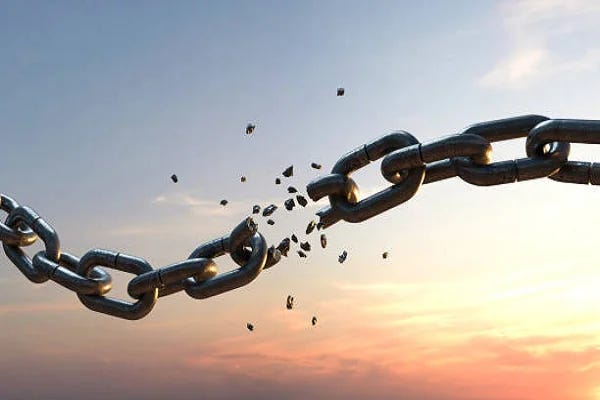
Maybe she didn’t have to inherit the silence. Maybe she didn’t have to carry the guilt that was not hers. Maybe she didn’t have to follow the path that was carved before she was even born.
But to break a chain was not to undo the past. It was not to erase the love that came with the pain. It was simply to say: It ends with me. Not in anger, not in resentment—but in understanding. In a quiet, unwavering promise to the future.
One day, when someone asked where she came from, she would tell them the truth. She would tell them of the sacrifices, the resilience, the unspoken grief, and the whispered dreams. But she would also tell them of the moment she sat at the dinner table and did not nod along.
She would tell them how she became the first to break the chain.
But breaking the chain was not a single moment—it was a lifetime of choices. It was unlearning the instinct to apologize for taking up space. It was standing firm when the old guilt crept in, whispering that change was betrayal. It was teaching herself that love did not have to be earned through suffering, that her worth was not measured by how much she endured.
It was in the moments when she hesitated before speaking up, the ghost of past generations pressing a finger to her lips, and she took a deep breath and spoke anyway. She felt it then—the air, thick and weighted, like it resisted change. But her voice did not tremble.
It was in choosing joy without guilt, in allowing herself to dream beyond the limits set before her. It was in forgiving the ones who came before her, not for their sake, but for her own—for the freedom to move forward without the weight of their unspoken pain on her shoulders.
Some days, she faltered. The old ways pulled at her. Silence felt safe.
But then she remembered: she was not just living for herself. She was living for the ones who never got the chance. She was writing a story that her ancestors never had the pen to write. And one day, someone would look back and see that the cycle ended with her.
She was not alone in this. There were others—people like her, scattered across families, across time, across the world. The first to say no. The first to step out of the mold. The first to dare to believe they could build something different. She had seen it in a childhood friend who left home chasing a dream no one understood. She had heard it in the voice of a cousin who, for the first time, spoke about the things that were once buried under layers of obedience.
To break the chain was not to walk away from her past. It was to honor it by forging a different future. One where love was given freely, where fear did not dictate choices, where silence was no longer the language of survival.
She imagined a child—maybe her own one day, maybe someone else’s—growing up in a world where they did not have to shrink to be loved, where they did not have to unlearn fear just to exist fully. A child who would never have to ask for permission to be themselves.
One day, when someone asked where she came from, she would tell them of the sacrifices and the resilience. But she would also tell them of the first time she chose to be different. And the second time. And the third.
Because breaking the chain was not a moment. It was a promise, kept over and over again.
And this time, the silence would not win.
~penned by Sagun Gupta
Interested in Beyond the Quill? Visit our website to learn more about open opportunities, submission guidelines, and past initiatives!